Wednesday, December 20, 2006

Meet the Winners of the 2006 Flannery O'Connor Award for Short Fiction

We're pleased to announce the three newest winners of the Flannery O’Connor Award for Short Fiction: Anne Panning for Super America, Peter LaSalle for Tell Borges If You See Him, and Margot Singer for The Pale of Settlement. The Press will publish all three titles in the fall of 2007. The winners each will receive a cash award of $1,000.

Anne Panning is an associate professor of English at the State University of New York-Brockport. A native of Minnesota, Panning once served as a Peace Corps volunteer in the Philippines. Her first short-story collection, The Price of Eggs, was published in 1992. Her creative nonfiction and short stories have appeared in such publications as the Beloit Fiction Journal, Prairie Schooner, South Dakota Review, Black Warrior Review, and In Short II: An Anthology of Brief Creative Nonfiction. Panning’s essay “Trailer Court: Rolling” won the Passages North Thomas Hruska Nonfiction Prize. Her other honors include the Bellingham Review’s Annie Dillard Award for Creative Nonfiction, the New Letters Literary Award (First Place, Fiction), and the Hackney Literary Award, which is awarded for an unpublished novel.


Peter LaSalle grew up in Rhode Island, graduated from Harvard, and has taught at universities in this country and in France. He is the author of two previous story collections, The Graves of Famous Writers and Hockey Sur Glace, and a novel, Strange Sunlight. He has contributed fiction to many magazines and anthologies, including Paris Review, AGNI, Tin House, Best American Short Stories, Best of the West, Sports Best Short Stories and Prize Stories: The O. Henry Awards. He is also active as an essay writer and book critic, having contributed to The Nation, The Progressive, The New Republic, Commonweal, Raritan, and AGNI. In 2005 he received the Award for Distinguished Prose from the Antioch Review. For a dozen years LaSalle was a regular visiting faculty member at the Harvard University Summer School, and is Susan Taylor McDaniel Regents Professor in Creative Writing at University of Texas at Austin.


Margot Singer's fiction and creative nonfiction have appeared in numerous journals, including The Sun, AGNI, North American Review, Western Humanities Review, Third Coast, and Ascent. She won Shenandoah’s Thomas H. Carter Prize for the Essay, was a finalist for the Prairie Schooner Book Prize, and has been nominated for several Pushcart Prizes. Singer earned a PhD in Creative Writing from the University of Utah, and currently lives in Granville, Ohio, where she is an assistant professor of English at Denison University.


The Flannery O’Connor Award recognizes today's best short fiction writing. The first prize-winning book was published in 1983 to critical acclaim, and the award has since become an important proving ground for new writers. The series has been called “one of the most prestigious series in university press publishing," by NPR critic Alan Cheuse. The winners are selected through an annual competition. Previous award-winning collections include Antonya Nelson’s The Expendables, Ha Jin’s Under the Red Flag, and Gina Ochsner’s The Necessary Grace to Fall.

Thursday, December 07, 2006

Short Takes

Jim Howell, author of HEY, BUG DOCTOR!, recently spoke with Rickey Bevington of Georgia Gazette. The taped interview will air on Friday's show, December 15, at 3-4 pm. The show then re-airs on Sunday, December 17, from 10-11 am. A podcast will be available should you miss both of these dates.

Outrage, wonder, enlightenment: you'll feel that and more as you read this listing of the year's
fifty best singles by music critic Frank Kogan, author of REAL PUNKS DON"T WEAR BLACK.

The Times Daily, which covers Northwest Alabama has just reviewed our history of Mobile's "iron lace" architecture, AN ORNAMENT TO THE CITY.

Recent coverage of Greg Downs's
SPIT BATHS:
Largehearted Boy
Small Spiral Notebook
storySouth

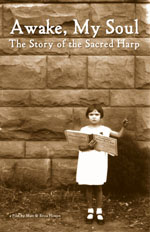
Follow-up to our November 29 posting about Sacred Harp music: the producers of the documentary
Awake, My Soul report that an another air date has been added: January 14 at 7 p.m. Also, the timing could not have been better for this review of our book THE SACRED HARP to appear on BookPleasures.com. The reviewer, Kathryn Atwood, is part of the duo History Singers.

Wednesday, November 29, 2006

The Soul-Filling Sound of Sacred Harp Music

If you enjoyed Awake, My Soul, the recently aired documentary on Sacred Harp singing (also known as shape-note, or fasola, singing), then be sure to tune in to Public Radio International's Sound and Spirit this Sunday, December 3. Host Ellen Kushner will be featuring "shape-note singing from the Sacred Harp and other collections of American mountain folk hymns," as well as "concert music from American composers inspired by this rough and ready American hymnody."

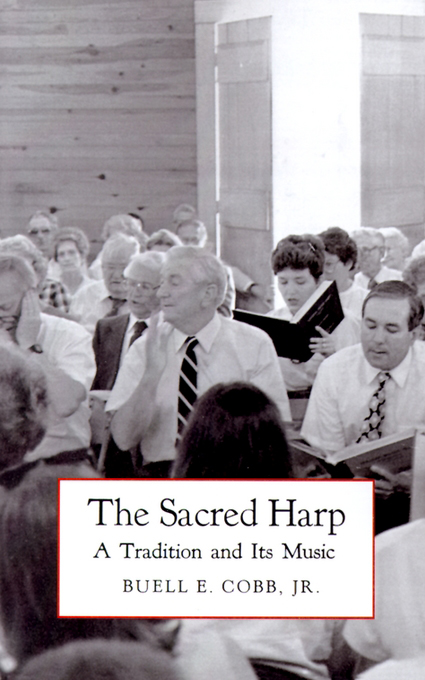
Sacred Harp singers are very knowledgeable about the history and traditions of their music, and the web has many good sites on this distinctly American musical form. Poke around for just a little while and you'll notice the names Buell E. Cobb Jr. and John Bealle appearing repeatedly in resource listings about shape-note music. Cobb is the author of THE SACRED HARP: A TRADITION AND ITS MUSIC and Beall is the author of PUBLIC WORSHIP, PRIVATE FAITH: SACRED HARP AND AMERICAN FOLKSONG.

Praised by American Music as a "thoroughly researched 'inside' view," Buell Cobb's book is an ideal introduction to Sacred Harp singing. John Bealle asks why one particular hymnal, The Sacred Harp, first published in 1844, has outlived so many other shape-note song collections. To help explain the songbook's enduring popularity, Bealle studies it in the context of a century and a half of American musical history. As the Alabama Review wrote, PUBLIC WORSHIP, PRIVATE FAITH "brims with insights on a variety of topics."

Resources:

Awake, My Soul producer Matt Hinton was interviewed on the 11/10/06 editon of Georgia Gazette by host Rickey Bevington. Listen to it on the web. Interview begins at 14:33 into the show.

The New Georgia Encyclopedia's article on Sacred Harp singing.

Great photos of contemporary shape-note singing on the Flickr Fasola pool.

A Sacred Harp FAQ.

Some shape-note lyrics understandably have become a bit archaic or obscure over time. Here's a lexical companion that sheds light on words, phrases, and references in a number of songs.

Illustrations:

Top left: Poster for the documentary Awake, My Soul.

Top right: Cover of John Bealle's PUBLIC WORSHIP, PRIVATE FAITH.

Bottom left: Cover of Buell E. Cobb Jr's THE SACRED HARP.

Bottom right: Some lines of music showing distinctive "shape notes": triangle (fa), a circle (sol), a rectangle (la), and a diamond (mi). Courtesy of Atlanta Sacred Harp Singers.

Thursday, November 09, 2006

Short Takes

Mrs. Dull's SOUTHERN COOKING was recently featured in the Atlanta Journal-Constitution. The piece quotes another of our authors, Nathalie Dupree. Damon Lee Fowler also gets a nod. Fowler, whose foodie pursuits include a column in the Savannah Morning News, wrote the foreword to our edition of Mrs. Dull's classic cookbook.

Philadelphia Weekly has
interviewed Greg Downs, author of SPIT BATHS: "A childhood split among central Kentucky, Nashville, and Hawaii gave Downs a rare sense of how location and history shape people. His characters devour biographies, attend politicians' funerals, chaperone field trips, latch onto outmoded street names, unearth secrets about dead presidents and watch chain stores gobble up small towns." Here's another interview with Greg at LitPark, and a profile at Nashville Scene. All Greg, all the time, at MySpace.

Which is more rare: A great album or a great review of an album? Frank Kogan, author of
REAL PUNKS DON'T WEAR BLACK, has the answer in this Blogcritics interview.

Our bloggin' authors: Meet "
Madam Mayo," better known to us as C. M. Mayo, author of SKY OVER EL NIDO. When she's not bloggificationizing, Mayo writes and edits and champions literature in translation.